
Friable Asbestos Removal
Friable asbestos can be crumbled, pulverised or reduced to powder by hand when dry, making it the highest-risk form of asbestos to disturb. Its removal is restricted to Class A licensed removalists under the WHS Regulation 2011 (Qld) and carried out under negative pressure enclosure with mandatory air monitoring and independent clearance.
Hazclear Environmental delivers friable asbestos removal across residential, commercial and industrial sites — with every project independently cleared by a licensed asbestos assessor before any area is returned to use.
What Hazclear delivers for friable asbestos removal
Friable removal requires the highest level of control under Queensland WHS legislation. Hazclear manages the full scope — from Class A licensed removal through negative pressure containment, mandatory air monitoring and independent clearance certification.
Class A Licensed Removal
Friable removal is carried out under Hazclear’s Queensland Class A Asbestos Removal Licence No. 3030414, with a licensed supervisor present whenever Class A work is under way.
Negative Pressure Enclosure
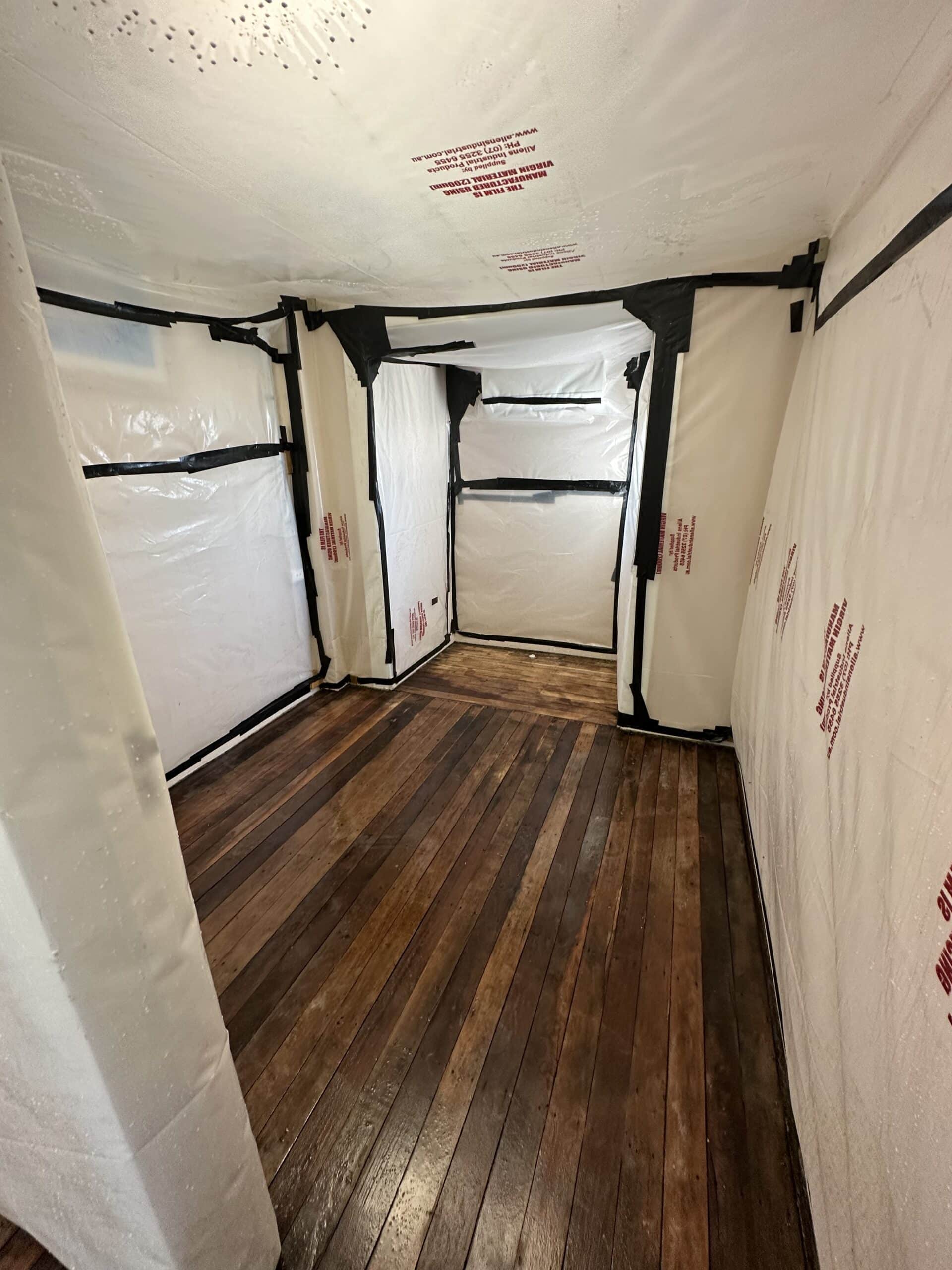
Removal areas are enclosed and placed under negative pressure so far as reasonably practicable, with wet-removal methods used in accordance with the WHS Regulation.
Mandatory Air Monitoring
Air monitoring by an independent licensed asbestos assessor runs throughout Class A removal, with additional controls required from 0.01 fibres/mL and work stopped above 0.02 fibres/mL.
Independent Clearance
A licensed asbestos assessor who is not involved in Hazclear’s removal business for the project completes the visual inspection and clearance air monitoring before the area is returned to use.
Where friable asbestos is typically found
Friable asbestos is found in a range of building materials and plant components, particularly in older commercial and industrial buildings. Any bonded material that has degraded to the point it can be crumbled by hand is also classified and treated as friable.

Sprayed Coatings & Pipe Lagging
Sprayed fire-proofing, pipe lagging and thermal insulation commonly found in plant rooms, ceiling cavities and mechanical areas.
Degraded Bonded Material
Bonded materials such as cement sheeting that have weathered, been fire-damaged or water-damaged to the point they crumble and no longer hold together.


Millboard, Gaskets & Rope
Millboard, asbestos rope, gaskets and packing materials found in older switchboards, boiler rooms, sub-floor areas and industrial plant.
Floor Tile Adhesive & Bitumen Backing
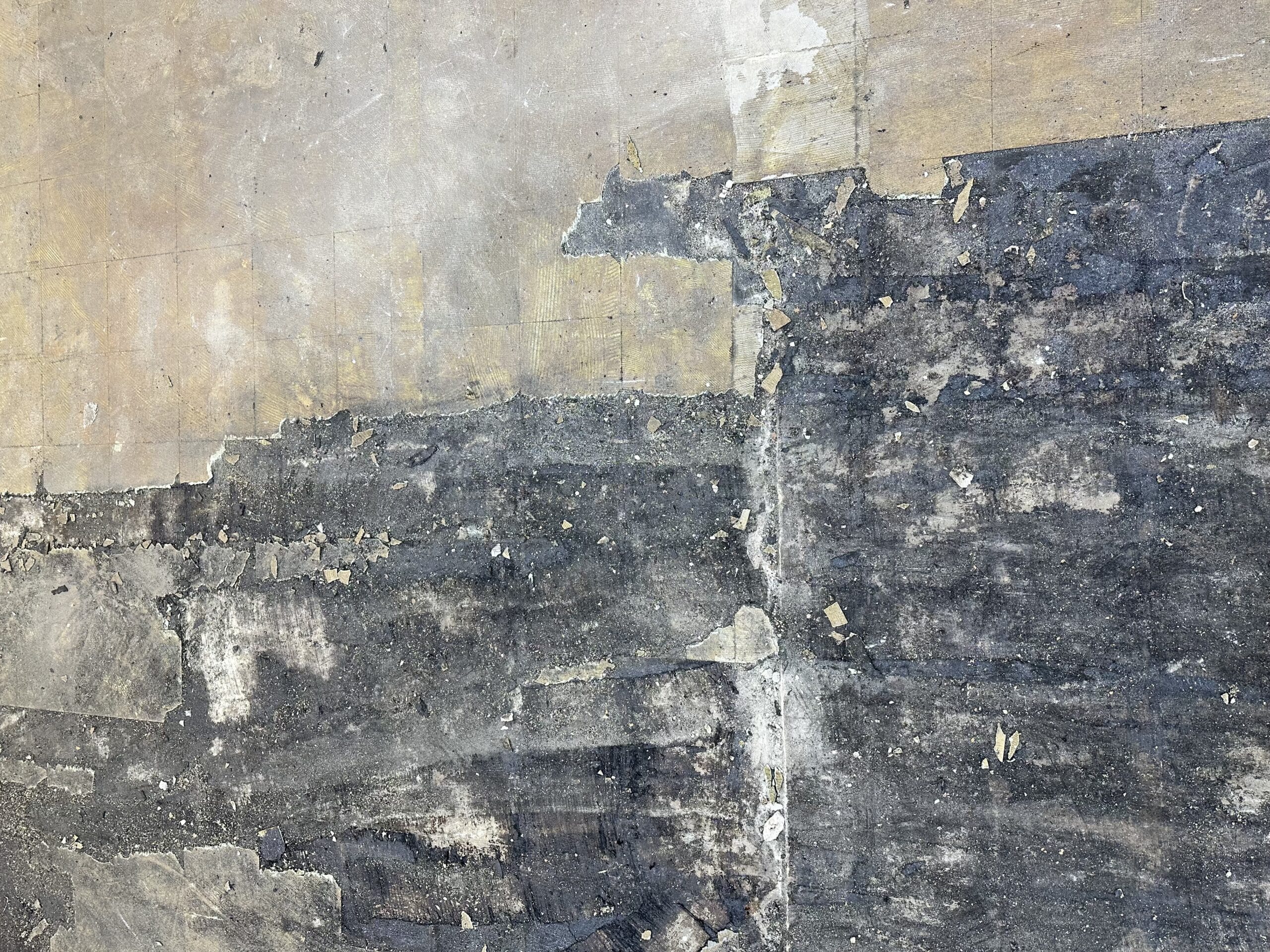
Black adhesive used to fix vinyl and floor tiles, and bitumen-based backing on older sheet flooring — often containing chrysotile asbestos that becomes friable when scraped or ground.

Loose Dust & Debris
Loose asbestos dust, fragments and debris accumulated in ceiling cavities, wall cavities, sub-floor spaces and around deteriorating asbestos materials — classified as friable regardless of the original source material.
Textured Coatings & Decorative Finishes
Textured ceiling coatings, stipple finishes and decorative wall textures that contain asbestos — become friable when sanded, scraped or mechanically disturbed during renovation.


Asbestos Cement Sheeting & Low Density Board
Flat and corrugated asbestos cement sheeting used in walls, ceilings, eaves and wet areas, and low density board (LDB) — a softer, more porous fibre board that is more easily damaged and becomes friable when broken, water-damaged or mechanically disturbed.
Our Friable Removal Process
Our Clearance & Closeout Process
The highest level of asbestos control
Common questions (FAQ)
Contact Us
Send through your site details and we will get back to you as soon as possible.